“Doctor, do I have IBS, or is this something more serious like IBD?”
I get asked some version of this almost every week in clinic. It’s a fair question. The names don’t help either, one letter apart, but they’re worlds apart in terms of what’s actually happening in your body. Getting IBD vs IBS confused is one of the most common mix-ups I see, so let’s clear it up properly.
What Is IBS?
IBS stands for irritable bowel syndrome. Think of it as a functional problem. The gut isn’t working the way it should, but if we looked inside with a camera, everything would appear structurally normal. No damage, no visible inflammation.
Patients usually describe:
- Bloating that comes and goes
- Cramping, often tied to stress or certain meals
- Bowel habits that swing between loose and constipated
Stress is a bigger trigger than most people realise. So is gut sensitivity. A lot of my IBS patients also have underlying imbalances they didn’t know about, which is exactly why I’ll often suggest a proper gut health test before we just label it “IBS” and move on.
What Is IBD?
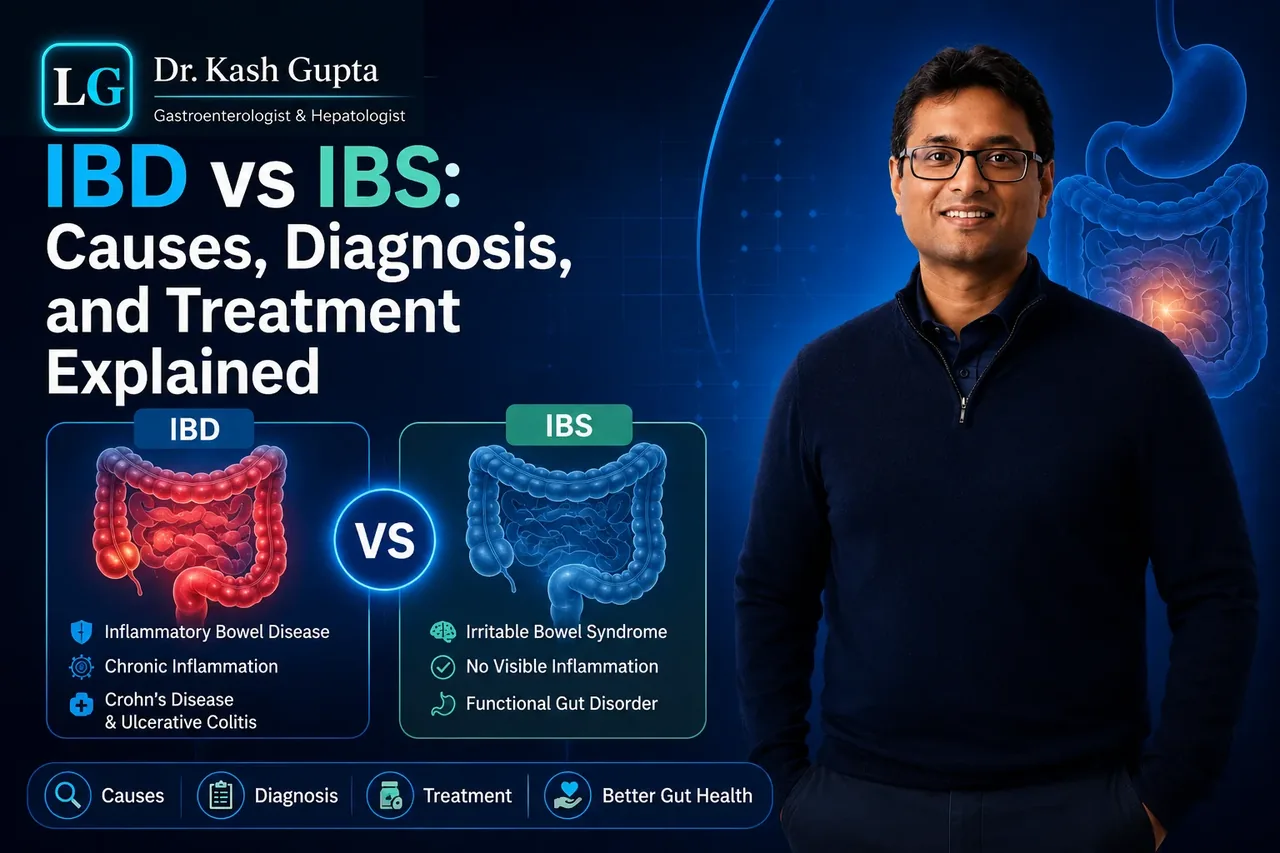
IBD, Inflammatory Bowel Disease, is a completely different story. It’s an umbrella term for Crohn’s disease and ulcerative colitis, and both involve real, physical inflammation in the gut lining.
Here, the immune system essentially attacks the digestive tract by mistake. Over time, that can cause ulcers, bleeding, and scarring.
This is really the heart of the IBD vs IBS distinction. One is functional. The other is structural and inflammatory, and it needs to be taken seriously.
What Actually Separates Them?
When patients ask me to break down IBD vs IBS in plain terms, I usually go through this list with them:
- Inflammation:present and visible in IBD, absent in IBS
- Bleeding:fairly common in IBD, unusual in IBS
- Weight loss:a red flag that points toward IBD
- Age of onset:IBD often shows up younger, though not always
- Long-term risk:IBD needs ongoing monitoring; IBS generally doesn’t carry the same risk
None of these on their own confirms anything. That’s what testing is for.
Where Do These Conditions Actually Come From?
IBS tends to trace back to how your gut and brain talk to each other. Add in food sensitivities, a past gut infection, or chronic stress, and you’ve got a recipe for it. Diet matters too, more than people expect. I’ve actually written before about how something as simple as drinking can throw your gut off.
IBD is more complicated, and honestly, we still don’t have all the answers. What we do know points to:
- A genetic predisposition
- An immune system that overreacts
- Environmental triggers, diet and the gut microbiome included
- Smoking, which noticeably worsens Crohn’s disease
One thing patients rarely expect is that gut inflammation doesn’t always stay in the gut. It can ripple out to the liver as well. I go into that connection in Alcoholic vs Nonalcoholic Fatty Liver Disease, worth a read if you’re dealing with both gut and liver symptoms together.
How We Tell Them Apart
We don’t diagnose either condition just by listening to symptoms. That’s not enough on its own.
For IBS, diagnosis is mostly about ruling things out. We check for red flags, review your symptom pattern, and sometimes run blood or stool tests to make sure nothing else is going on.
For IBD, we need actual proof of inflammation. That typically means:
- Blood tests checking inflammation markers
- A stool calprotectin test
- Colonoscopy, with biopsies taken along the way
- Imaging, when needed
I tell patients this often: guessing wastes time, and with IBD in particular, catching it early genuinely changes how things go. If your symptoms have been vague for a while, it might also help to read Symptoms of Fatty Liver and When to Seek Medical Advice, since fatigue and low energy get dismissed far too often, whatever the underlying cause turns out to be.
Treatment: This Is Where It Really Splits
This is where IBD vs IBS becomes two completely different conversations.
IBS management leans heavily on lifestyle:
- Dietary adjustments, low-FODMAP being a common starting point
- Better stress management
- The right digestive health supplements, used selectively
- Correcting gut bacteria imbalances where they exist
IBD treatment is more medical, and often ongoing:
- Anti-inflammatory medication
- Immune-modulating drugs or biologics
- Regular check-ins through blood work and scopes
- Surgery, in more advanced or complicated cases
Nutrition helps in both cases, just differently. And if you’re wondering which gut health supplements are actually worth trying versus which are just clever marketing, that’s a question worth answering before you spend money chasing the wrong fix.
Don’t Ignore These Signs
A few things should never be brushed off:
- Blood in your stool
- Weight loss you can’t explain
- A fever that won’t quit
- Symptoms that wake you up at night
- A family history of IBD
None of these are typical IBS behaviour, and they deserve a proper look rather than a guess.
The Bottom Line
Working out IBD vs IBS isn’t just a technicality. It changes how you’re treated, how closely you need monitoring, and honestly, your whole long-term outlook. IBS is manageable and rarely dangerous. IBD needs real medical attention, sometimes for life.
If you’re not sure which one applies to you, please don’t try to figure it out from Google alone. Get properly tested. If you’ve also got liver concerns sitting alongside your gut symptoms, it’s worth understanding your Life Expectancy with Fatty Liver Disease risk too, since the two are more connected than most people think.
I break down questions exactly like this every week on the Liver & Guts Podcast: real cases, real answers, no jargon. Tune in here and give it a listen; it might just answer the question you’ve been sitting on.