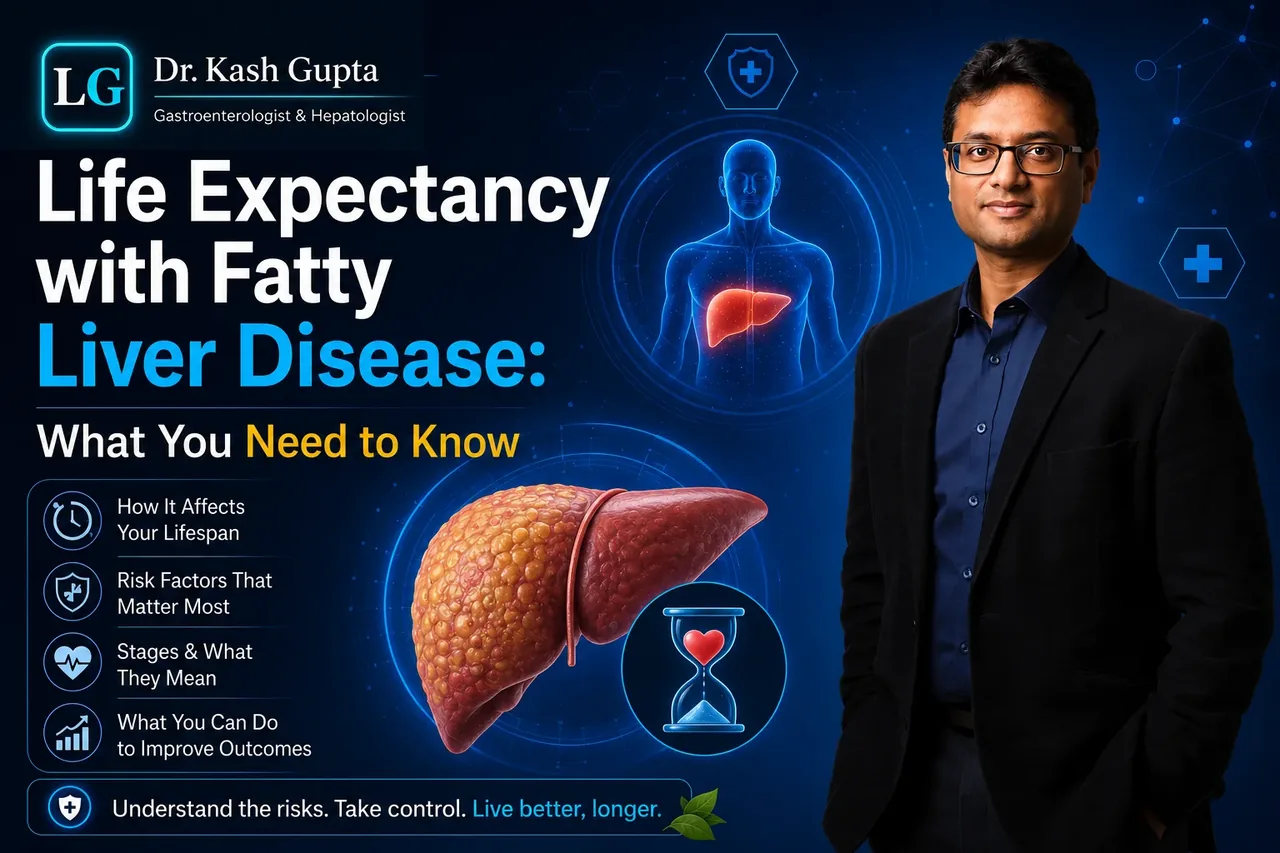
“Am I going to die younger because of this?” That’s usually the real question hiding behind a fatty liver diagnosis, even when patients ask it more politely. I hear it almost every week in clinic, and I get why it feels frightening. Here’s the honest truth: life expectancy with fatty liver disease isn’t one fixed number. It shifts depending on what stage you’re at, how your metabolism is doing overall, and this is the part most people don’t expect: how healthy your heart is. Let’s go through what the evidence actually says and what’s genuinely in your control.
First, What Are We Actually Talking About
Fatty liver disease means fat has built up inside your liver cells beyond what’s normal. Most cases fall under what we now call MASLD (previously NAFLD), and it’s far more common than people realise. I’ve talked about this at length on my podcast. A huge chunk of adults have it and have no idea, simply because it rarely causes symptoms early on.
Broadly, there are two versions:
- Simple fatty liver, where fat has accumulated, but there’s not much inflammation yet
- Steatohepatitis (MASH), where inflammation and liver cell damage have joined the party
The stage genuinely changes the conversation about outlook, so it’s worth knowing which one you’re dealing with.
Does It Actually Shorten Your Life?
If you’ve got simple fatty liver, caught early, it usually does not meaningfully cut your life short. I’ve watched plenty of patients turn this around completely with a handful of consistent changes.
Things get more serious once fibrosis, or scarring, starts forming. That’s really where life expectancy with fatty liver disease starts to shift:
- Mild fibrosis (stage 1-2) is largely reversible and has little bearing on lifespan
- Stage 3 fibrosis is more advanced, and the risk of complications climbs
- Cirrhosis, stage 4, is where liver function itself can become impaired, and this is where survival is most affected
Knowing your own scan result or biopsy staging matters more than knowing the general statistics, honestly. It’s the single most useful number you can ask your doctor about.
The Part That Surprises Most People
Here’s something that catches almost everyone off guard: fatty liver rarely kills people through liver failure. Most people with it die from heart disease. I know that sounds strange coming from a liver specialist, but it’s true, and it changes how we should think about risk entirely.
A few things tend to drive the long-term outcome more than anything else:
- Cardiovascular health, since heart disease is the leading cause of death in this group
- Diabetes or insulin resistance, which speeds up liver damage considerably
- How much fibrosis is already present? This is the strongest predictor for liver-related outcomes specifically
- Visceral (belly) fat, which is more metabolically damaging than fat elsewhere
- Alcohol, even in moderate amounts
- Age at diagnosis, simply because earlier detection buys more time to reverse things
This is really the whole idea behind what I write about. Liver health and heart health aren’t separate conversations. It’s the same conversation.
Can You Change the Trajectory?
Yes. Genuinely, yes. Fatty liver, especially in earlier stages, responds to lifestyle change better than almost any other chronic condition I treat. I’ve had patients reverse steatosis on a scan within a matter of months.
What actually moves the needle:
- Losing around 7-10% of body weight, which can resolve steatosis and even improve mild fibrosis
- Cutting back on added sugar and refined carbs, since these drive fat storage in the liver directly
- Walking regularly, even 30 minutes most days, makes a measurable difference
- Cutting alcohol out, or close to it, so the liver actually gets a chance to repair
- Sleeping properly, because poor sleep is tied to worse metabolic outcomes
- Keeping blood sugar and cholesterol in check, which protects the liver and the heart together
I share more detailed, practical protocols like this in my newsletter if you want something you can actually follow week to week.
If Fibrosis Has Already Set In
If you’ve been told you have more advanced fibrosis or cirrhosis, the approach naturally shifts. Regular monitoring becomes non-negotiable at this point: imaging, bloodwork, sometimes elastography to track how things are moving.
Even at stage 3, though, I want to be clear: aggressive lifestyle change paired with proper medical follow-up can slow things down, and sometimes stabilise the disease altogether. This is the kind of individualised guidance I go into more depth on with people inside my membership community, since general advice only takes you so far once things are more advanced.
Why Screening Matters So Much
Because this disease is quiet, screening is often the only way to catch it early. You should be paying particular attention if you have:
- Type 2 diabetes
- A larger waist circumference or higher body weight
- High cholesterol or triglycerides
- Family history of liver disease
Catching it at the fatty stage, before scarring begins, is genuinely where you have the most leverage.
Where This Leaves You
So, back to the original question. Life expectancy with fatty liver disease depends far more on your stage and overall metabolic health than on the label itself. Early fatty liver, managed properly, doesn’t have to take a single year off your life. Advanced fibrosis needs more careful, ongoing care, but even then, meaningful improvement is still very possible.
If there’s one thing I’d want you to walk away with, it’s this: don’t panic over the diagnosis, but don’t shrug it off either. What you do over the next few months genuinely shapes where this goes. Understanding your life expectancy with fatty liver disease really does start with getting accurate information early and acting on it before the picture changes.
Want to dig deeper into this topic? Watch the latest episode of the Liver & Guts Podcast here.