“So what should I actually eat?” That’s usually the first thing patients ask me once they hear the words fatty liver. And it’s a fair question. A fatty liver diet isn’t about starving yourself or throwing out entire food groups. It’s really just about giving your liver less fat to deal with, and more of what it needs to repair itself. Let me walk you through what I actually tell people in clinic.
Why food does more than medicine here
Here’s something patients don’t always expect to hear: there’s no pill for this. Not yet. What we have instead is decades of evidence showing that food choices change how much fat builds up inside liver cells. It’s one of the few conditions where what’s on your plate matters more than what’s in your medicine cabinet.
A good fatty liver diet, built around whole foods, fibre, lean protein, and healthy fats, can lower liver fat, ease inflammation, and improve the enzyme numbers we check on blood tests. I’ve watched this happen over and over in my own patients, often before they even notice a change in how they feel. If you’re not sure whether this applies to you, I’ve written before about the early signs of fatty liver that are easy to miss.
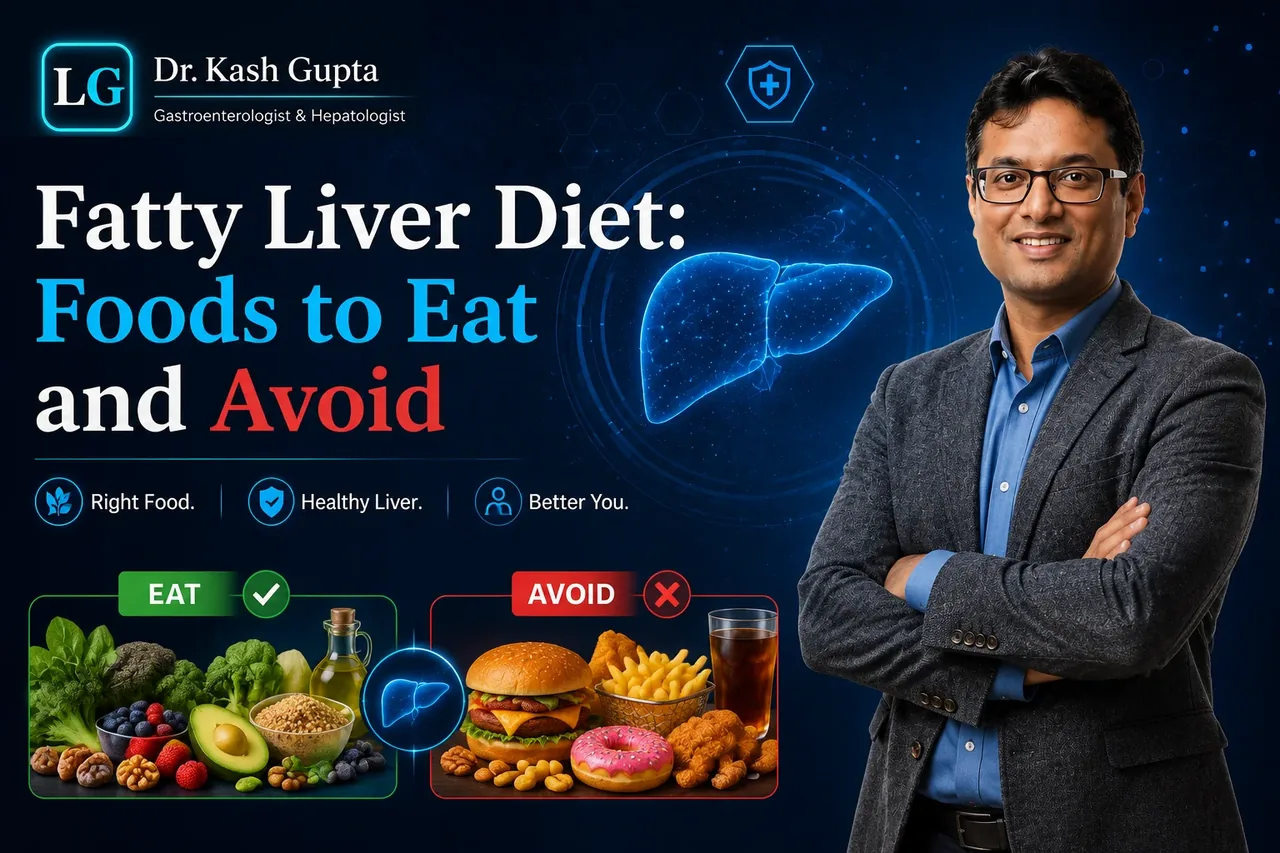
What foods to eat for fatty liver?
A few things I keep coming back to:
- Coffee: Regular drinkers seem to have slower liver scarring. A daily cup, unsweetened, is a habit worth keeping.
- Leafy greens: Spinach especially, and it works better raw than cooked.
- Beans, lentils, and soy: Good plant protein and fibre, and they’re linked to lower risk.
- Fatty fish: Salmon, sardines, trout. The omega-3s help pull down liver fat and improve cholesterol.
- Whole grains: Oats and similar foods support healthier triglyceride levels.
- Nuts: Just a small handful daily is tied to less inflammation.
- Turmeric: May help bring down liver enzyme levels over time.
- Sunflower seeds: A solid natural source of vitamin E.
- Garlic: A few studies show it can modestly reduce liver fat.
- Unsaturated fats: Swap butter and fatty cuts for olive oil, avocado, nut butters. Honestly, this alone makes a difference.
I usually describe this as eating “Mediterranean-ish.” Not a strict plan, just a general direction. More plants, more fibre, better fats, less processed junk.
What to go easy on
Just as important as what you add is what you cut back on:
- Alcohol: Even a moderate amount adds strain to a liver that’s already struggling.
- Added sugar: Sodas, sweets, fruit juice. Your liver converts that sugar straight into fat.
- Fried foods: Lots of fat and calories, not much benefit.
- Too much salt: Excess sodium is linked to higher fatty liver risk.
- Red and processed meat: High in saturated fat, which works against you here.
You don’t need to eliminate any of this completely. What matters is how often it shows up. A treat once in a while is nothing like a daily habit.
What a “healthy diet for fatty liver” looks like
I don’t hand patients a rigid meal plan. Real life doesn’t work that way. But here’s a rough example of what a day could look like:
- Breakfast: Oatmeal with berries, a spoon of almond butter, black coffee.
- Lunch: Spinach salad with olive oil, grilled chicken, small baked potato.
- Dinner: Grilled salmon, a bean salad, steamed vegetables, a bit of quinoa.
- Snack: Apple slices with peanut butter, or hummus and raw veggies.
Nothing complicated. Just fibre, lean protein, good fat, and minimal processed food. If you want this fleshed out further, I actually put together a full 7-day meal plan for fatty liver that gives day-by-day meals rather than just a single snapshot.
A quick word on supplements
Patients ask me constantly whether a supplement can speed this up. My honest answer is usually no, not on its own. I’ve broken down what the research actually says in my post on fatty liver supplements, but the short version is that food does the heavy lifting here. Supplements, at best, support that work. They don’t replace it.
What I want every patient to actually understand
Diet is important but not always the key. This also involves weight, sleep, activity level, and factors such as insulin resistance. After all, I don’t just give out normal diet sheets. I consider the big picture when I make a recommendation, and sometimes that means paying close attention to the interplay between the liver and other problems such as metabolic health issues (MAFLD) that are closely linked to the liver.
There are a couple of points to keep in mind:
- Any small, manageable adjustment is better than a dramatic short-term diet, most of the time.
- As little as 5-10% weight loss can significantly diminish the liver’s fat content.
- Exercise is as important as eating. A daily stroll does the trick.
- Even for someone who only drinks alcohol occasionally, cutting it back can make a tremendous difference.
I have written more about the processing of fat in the liver, and why some people develop fatty liver without extra weight on the Liver & Guts Podcast. I do my best to make sure that the science is not jargon-y there.
When it’s worth getting proper guidance
Going online and reading about a fatty liver diet is a good start, but it’s not going to work for you without a plan that is based on your own bloodwork, imaging, and history. It may be a mild condition that is fully reversible, or it may be something that requires attention to the fatty liver, and the truth is that it’s a whole different ball game.
If your recent scan or blood test indicated fatty liver, or you just want to be honest and say you’re done with all the guesswork and want something made just for you, you won’t be disappointed by meeting with me. And if you like understanding the reasoning before you follow advice, the podcast drops new episodes every week on exactly this kind of thing. Your liver works quietly for you every single day without asking for much. A thoughtful fatty liver diet is one of the simplest ways to give something back.