I still remember the first patient I diagnosed with fatty liver. This was back when I was training in Oxford. She wasn’t overweight; she was fit, and she had absolutely no idea anything was wrong until a routine scan flagged it. That one stuck with me. Fatty liver rarely looks like what people picture in their heads, and to this day, almost every patient asks me some version of the same thing: “So what am I actually supposed to eat?”
So I put together this plan. It’s not a detox, and it’s definitely not rigid. It’s meant to be something you can follow on a Tuesday and still be following a month from now.
Why Food Matters More Than You’d Think
Your liver processes nearly everything you put in your mouth. Sugar, alcohol, saturated fat – it all runs through this one organ. Keep overloading it, and fat starts collecting inside the liver cells. Give that enough time, and you’re looking at inflammation, then scarring.
Here’s the encouraging part, though. I once had a researcher on my podcast whose data showed measurable drops in liver fat within a few weeks of changing what people ate – before any real weight loss had even kicked in. Diet moves this needle faster than most people expect.
What to Eat
I try not to overcomplicate this for patients, because complicated rules don’t survive contact with a real week. So this is roughly what ends up on the “eat more of” list:
- Leafy greens – spinach, kale, anything in that family. Good source of antioxidants for the liver.
- Fatty fish like salmon, mackerel, sardines. The omega-3s actually do something here.
- Whole grains over refined ones – oats, quinoa, brown rice.
- Lentils and chickpeas, mostly for the fiber and steadier blood sugar.
- Olive oil as your go-to fat.
- A small handful of walnuts or some flaxseed, most days if you can manage it.
- Black coffee, if that’s your thing. There’s a decent body of research tying it to lower liver enzymes.
Nothing on that list is exotic, and that’s sort of the point.
What to Cut Back On
- Sugary drinks and fruit juice – these hit the liver almost directly.
- White bread, pastries, most packaged snack food.
- Fried food, especially anything cooked in oil that’s been reused.
- Too much red or processed meat.
- Alcohol. Even “just one glass” adds up while the liver’s trying to recover.
- Sauces and cereals with sugar hiding in the ingredient list – worth actually checking labels.
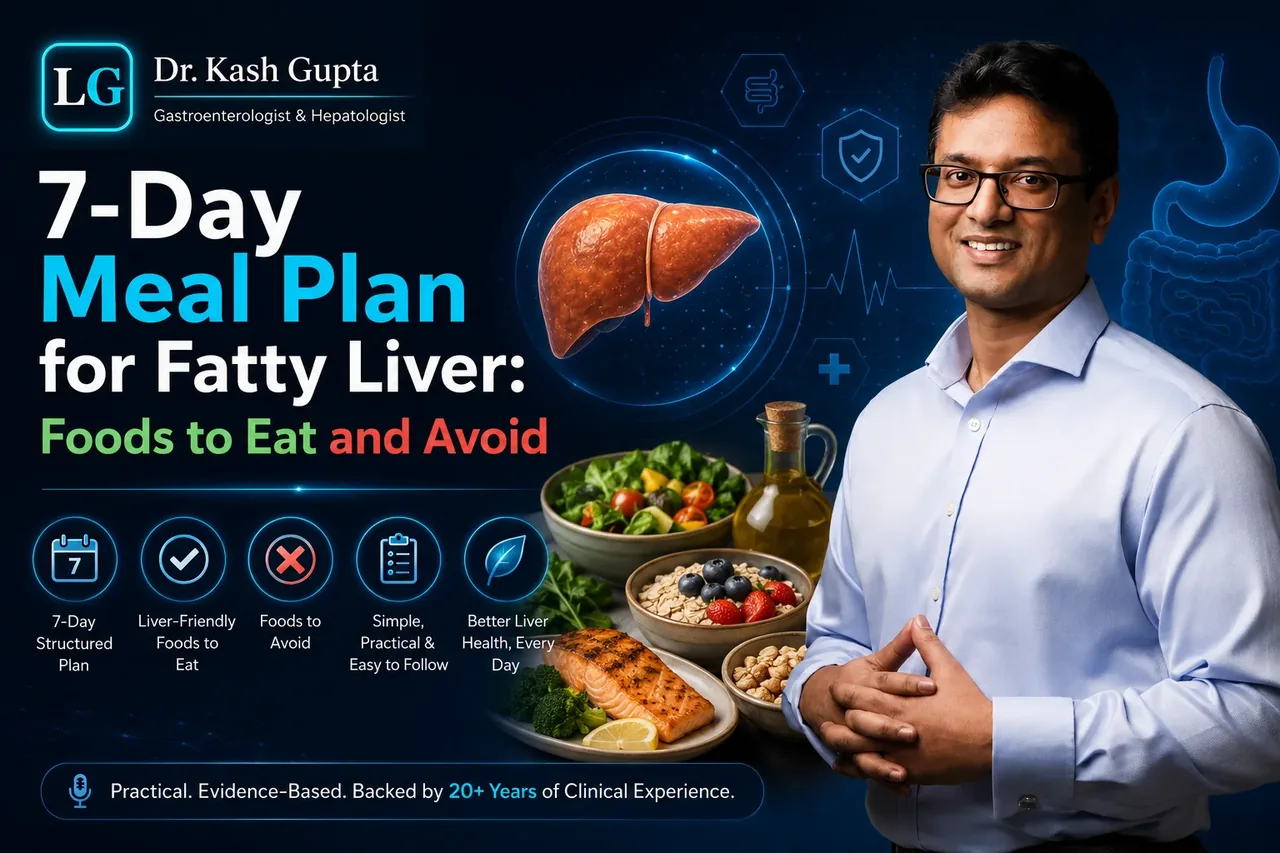
The Actual 7-Day Plan
This is close to what I’d hand a patient in clinic. Treat portions as flexible – adjust for your own body and appetite. It’s a template, not a prescription.
Day 1: Oats with berries and walnuts. Grilled chicken salad for lunch. Baked salmon with steamed broccoli for dinner.
Day 2: Greek yogurt with flaxseed. Lentil soup at midday. Stir-fried tofu with brown rice in the evening.
Day 3: Vegetable omelet to start. Quinoa and chickpea salad for lunch. Grilled fish with roasted vegetables for dinner.
Day 4: Spinach and berry smoothie. Turkey and avocado wrap. Bean chili to close out the day.
Day 5: Whole grain toast with avocado. Mixed vegetable stir-fry. Baked mackerel with sweet potato.
Day 6: Chia pudding with almonds. Grilled vegetable and hummus bowl. Lentil curry with brown rice.
Day 7: Berry oat bowl. Salmon salad for lunch. Roasted vegetable and quinoa bowl to finish.
If you need something between meals, plain yogurt, a piece of fruit, or unsalted nuts all work fine. Nothing complicated there either.
It’s Not Just About Food
I tell patients diet is maybe 60% of this, not the whole picture. A few other things pull real weight:
- Move daily. Even a 30-minute walk reduces liver fat over time.
- Sleep matters more than people think. Poor sleep worsens insulin resistance, which feeds fatty liver directly.
- Drink enough water – sounds obvious, but most people genuinely fall short.
- Get retested every few months so you can actually track whether it’s working.
Where to Start
You don’t need to overhaul your entire kitchen overnight. Pick one week, follow the plan as closely as you reasonably can, and see how you feel by day seven. Most people notice less bloating and steadier energy before anything else shifts.
After two decades treating liver disease, the thing I keep coming back to is that consistency beats intensity, almost every time. Give this plan an honest shot. It won’t undo years of damage in a week – but it starts the process, and that’s really all your liver is asking for.