Almost every week, someone sits across from me in clinic and says, “But I feel fine.” And that’s the strange thing about this condition. By the time it’s picked up, the signs of fatty liver have usually been there for a while. Most people just didn’t know what they were looking at. So let’s talk about what your body might already be trying to tell you.
Why Fatty Liver Sneaks Up on People
Here’s the frustrating part about the liver. It can quietly accumulate fat for years without sending out an obvious alarm. No sharp pain. No moment where you think, “something’s wrong.” Just a slow drift.
That’s exactly why the signs of fatty liver get missed so often. They feel like everyday tiredness. Like “I’ve just been busy.” Like ordinary bloating after a big meal. By the time patients connect the dots, the liver has usually been under strain for a good while already.
The Early Signs of Fatty Liver
These are the things I ask about first when I suspect something’s off:
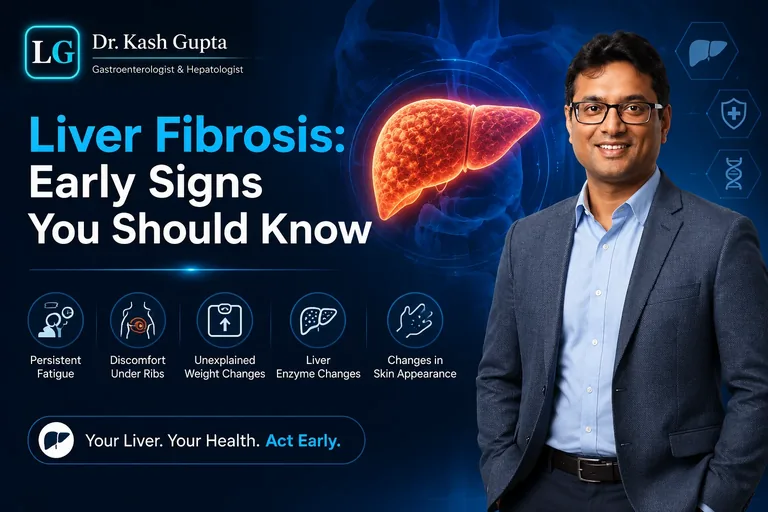
- Fatigue that doesn’t lift, even after a full night’s sleep
- A dull ache or pressure under the right ribs
- Weight creeping up around the middle, seemingly out of nowhere
- Bloating with no obvious trigger
- Mild puffiness in the ankles or legs
- Darker patches of skin, often around the neck or under the arms
- Trouble focusing, that foggy-headed feeling patients struggle to describe
None of these, on their own, mean much. But when two or three show up together and stick around, I want to know about it.
Who Should Be Extra Watchful
Some people are simply more at risk, symptoms or not. Over the years, I’ve come to keep a closer eye on:
- Anyone with insulin resistance or type 2 diabetes
- People carrying extra weight around the waist
- Anyone with raised triglycerides or cholesterol
- Those with a family history of liver disease
- Regular drinkers, even at “moderate” levels
The liver and blood sugar are far more connected than most people realise. I dug into that relationship in Liver and Diabetes: Understanding the Connection, if you’d like the fuller picture.
Why Early Detection Matters So Much
This is where fatty liver actually gives you an advantage, if you catch it in time. Unlike a lot of chronic conditions, it’s often reversible in its early stages.
Leave it unchecked, though, and it can progress toward inflammation and scarring, sometimes without much warning. I tell patients this often: the liver doesn’t complain loudly until real damage has already been done. Which is exactly why noticing the signs of fatty liver early puts the power back in your hands.
What I Actually Recommend to Patients
I don’t reach for medication first. Honestly, most of the time, we don’t need to. Lifestyle changes do the heavy lifting:
- Cut back on sugar and refined carbs; they’re bigger drivers than most people expect
- Move more, even a daily walk makes a measurable difference
- Protect your sleep; poor sleep quietly worsens insulin resistance
- Cut down on alcohol, or cut it out where you can
- Get bloodwork done regularly, not just when something feels off
Diet tends to matter more than people expect walking in. I laid out exactly what to eat and what to avoid in my Fatty Liver Diet guide, which works well alongside these habits.
A Quick Note on Terminology
You may have noticed the name for this condition keeps changing. That’s not doctors overcomplicating things for the sake of it. It actually reflects a better understanding of what’s driving the disease. I unpacked the reasoning behind it in MASLD vs NAFLD: Understanding the New Terminology, if the naming has ever confused you too.
How to Diagnose Fatty Liver
Symptoms alone won’t give you a diagnosis. In clinic, I typically rely on a combination of:
- Blood tests to check liver enzymes
- Ultrasound to see fat deposits directly
- FibroScan or elastography to measure liver stiffness
- Further imaging or biopsy, but only when it’s genuinely needed
If some of what I’ve described sounds familiar, please don’t try to self-diagnose from a list online. Get it properly checked. It’s the only way to know for sure.
The Bottom Line
Your liver works quietly, day after day, and it rarely asks for attention until something’s already gone wrong. That’s really the whole point of this article.
If you’ve been unusually tired, gaining weight you can’t explain, or dealing with odd bloating that won’t settle, please don’t brush it off. These could be early signs of fatty liver, and dealing with it now is a lot easier than trying to undo damage later.
I talk about this on the Liver & Guts Podcast fairly often, because I genuinely think people deserve to understand their own bodies without the jargon. And if anything here felt a little too close to home, don’t wait it out. Book a private consultation with me, and let’s find out what’s really going on.