I had a patient a few months back – late forties, active, no complaints beyond “just tired.” By the time he came to see me, his liver was already in trouble. That’s the thing about liver disease. It doesn’t shout. It whispers, then it screams. Knowing the 7 signs your liver is dying early can be the difference between managing the damage and watching it become irreversible.
Your liver quietly does hundreds of jobs for you – filtering toxins, making proteins, storing energy. It can absorb a lot of damage before it starts complaining. But when it finally does speak up, you need to listen fast.
Why Liver Failure Stays Silent for So Long
The liver has huge reserve capacity. It can lose a large chunk of its function and still keep you feeling “normal.” That’s exactly why so many patients I see are already at an advanced stage before anything visible shows up. This is also why I keep repeating the 7 signs your liver is dying to every patient who’ll listen – because catching even one or two early can change the outcome completely.
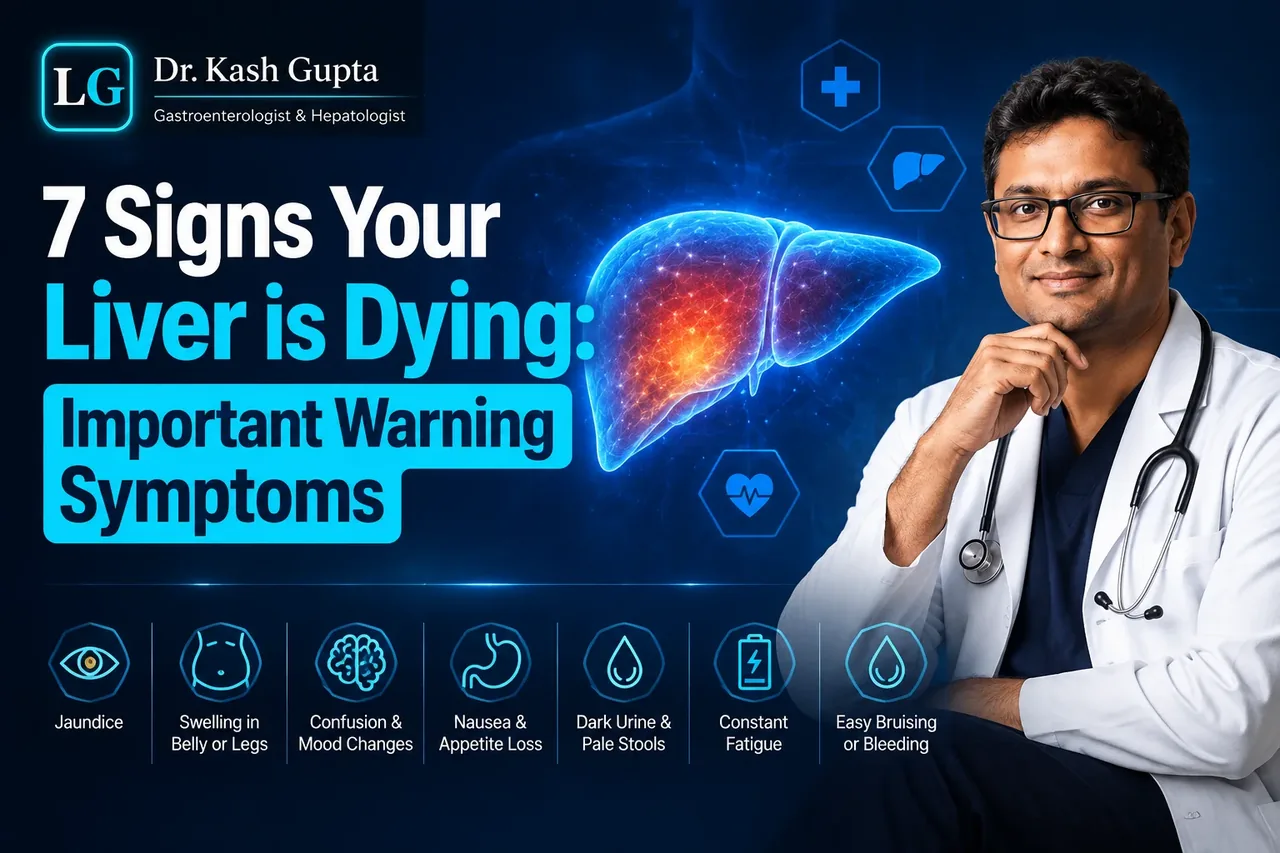
The 7 Warning Signs to Watch For
Here’s what I tell patients to actually watch for:
1. Jaundice
- Yellowing of the eyes first, then the skin
- Often gets worse after fatty meals
- One of the clearest visible signs of liver trouble
2. Swelling in the Belly or Legs
- Sudden belly bloating (ascites)
- Puffy ankles or feet by evening
- Happens when the liver stops making enough albumin, letting fluid leak out
3. Confusion or Personality Changes
- Forgetfulness, trouble concentrating
- Mood swings or unusual irritability
- Caused by toxins like ammonia building up because the liver can’t clear them
4. Constant Nausea and Appetite Loss
- Feeling sick most days, for weeks
- Vomiting after small meals
- Early fullness even on light food
5. Dark Urine and Pale Stools
- Urine that looks like strong tea
- Stools turning grey or clay-colored
- A strong signal that bile flow is blocked
6. Deep, Unshakable Fatigue
- Tiredness that doesn’t improve with rest
- Struggling with everyday tasks
- Often tied to anemia and poor energy metabolism
7. Easy Bruising, Bleeding, or Itching
- Bruises from the smallest bumps
- Bleeding gums or frequent nosebleeds
- Itching that’s worse at night
If you notice two or more of these together, please don’t wait it out. That combination is exactly why I stress the 7 signs your liver is dying so often in my clinic – most patients only recognize them in hindsight.
What’s Actually Happening Inside
Each of these symptoms points to a specific failure:
- Bilirubin buildup → jaundice
- Low albumin and rising pressure → swelling
- Toxin overload → confusion
- Reduced bile production → nausea, pale stools
- Clotting factor loss → bruising and bleeding
None of these happen overnight. They build slowly, often over years of unnoticed strain – from alcohol, fatty liver disease, or untreated hepatitis. If any of this feels familiar, it’s worth reading about the early signs of fatty liver, since catching that stage is far easier than reversing failure later. And if alcohol is part of your history, I’ve also written in detail about signs of liver damage from alcohol, which often overlap with what we’ve covered here.
When to See a Doctor – Don’t Wait
Here’s my honest advice: don’t wait for all seven symptoms to show up together. Even one persistent sign deserves a blood test and a liver ultrasound. Simple things like liver function tests (LFTs), an abdominal scan, and a clinical exam can catch problems long before they become emergencies.
Ask yourself:
- Have you noticed unusual tiredness for weeks with no clear cause?
- Has your skin or eyes looked slightly yellow, even briefly?
- Do you bruise more easily than you used to?
- Has your appetite dropped without explanation?
If you answered yes to even one, get checked. Early liver disease is often very manageable. Advanced liver failure is not.
A Personal Note
I’ve sat across from too many patients who say, “I thought it was just stress” or “I figured I was just getting older.” The truth is, your body rarely lies to you – it just speaks quietly at first. Learning to recognize the 7 signs your liver is dying isn’t about fear. It’s about catching a fixable problem before it becomes a permanent one.