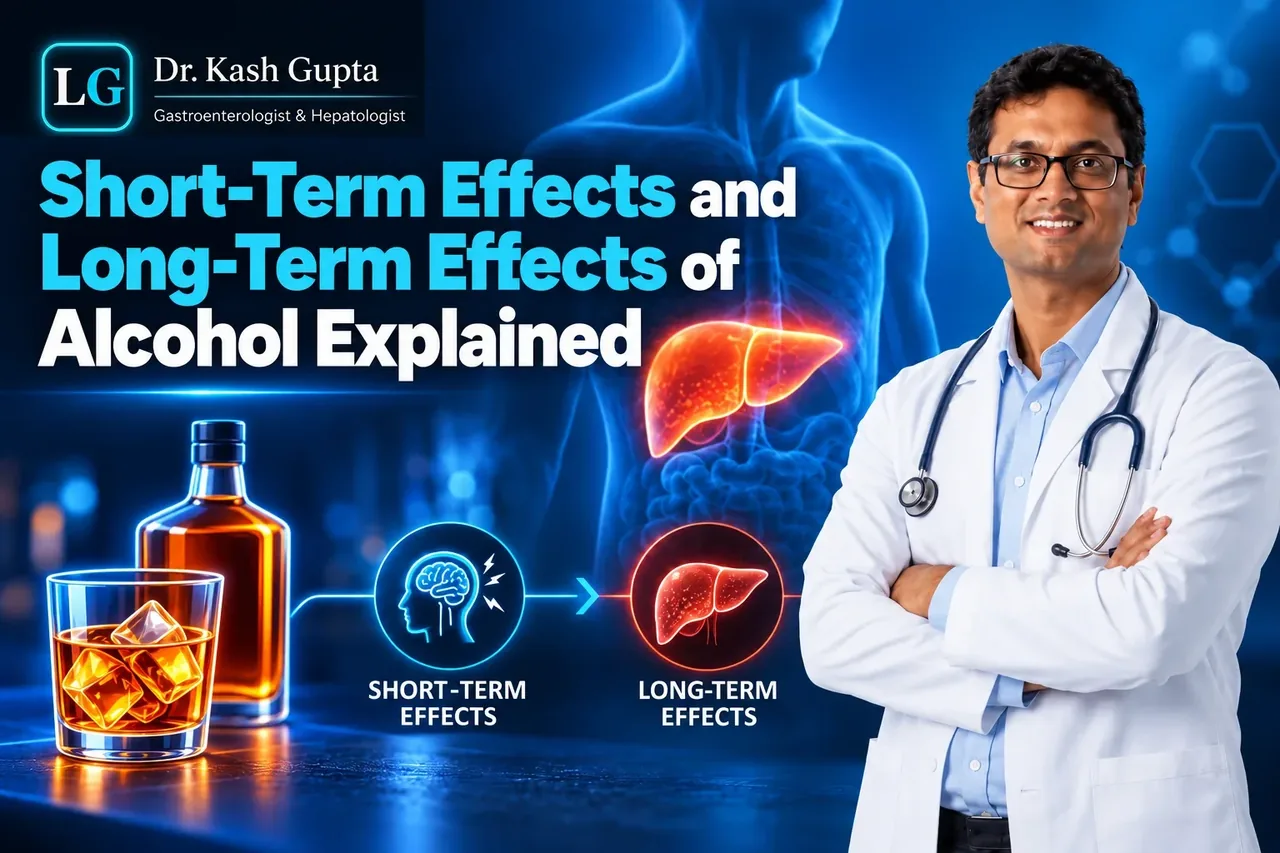
Last month, a patient told me, “Doc, I only have a few drinks.” Then he asked why he felt so tired. I’m Dr. Kash Gupta, and I explain it the same way every time. The short-term effects and long-term effects of alcohol are two very different stories. One hits you by morning. The other creeps up for years.
Short-Term Effects and Long-Term Effects of Alcohol: What Your Body Goes Through
Alcohol moves fast. Within minutes, it reaches your brain. Then your liver steps in and tries to clear it out. That’s a lot of work for one organ.
What You Feel Within Hours
- Slurred speech and clumsy movement
- Poor judgment, like that late-night text you regret
- Nausea, vomiting, and an upset stomach
- Dehydration and a pounding headache
- Broken sleep, even if you dozed off fast
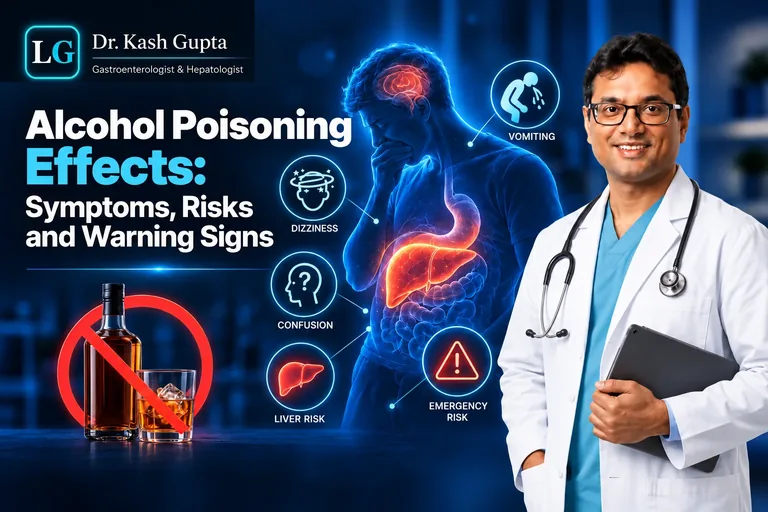
Too much in one night can get serious. I’ve written about the warning signs in my post on alcohol poisoning effects.
What Creeps Up Over Years
The scary part? It doesn’t hurt. You feel okay, so you carry on while your body quietly pays the price.
- Liver: fat build-up, swelling, scarring and, finally, cirrhosis
- Gut: burning reflux, gastritis, ulcers and a thrown-off microbiome
- Heart: rising blood pressure and an uneven heartbeat
- Brain: foggy memory, low mood and constant worry
- Cancer: higher risk of mouth, throat, liver and breast cancer
- Dependence: needing a drink just to feel like yourself
Liver trouble rarely warns you. So learn the early signs of liver fibrosis before it’s too late.
Why the Short-Term Effects and Long-Term Effects of Alcohol Are Connected
Think of every hangover as a small injury. One heals. But repeat it week after week, and the body starts to scar. That’s how a “harmless” weekend habit turns into a real problem.
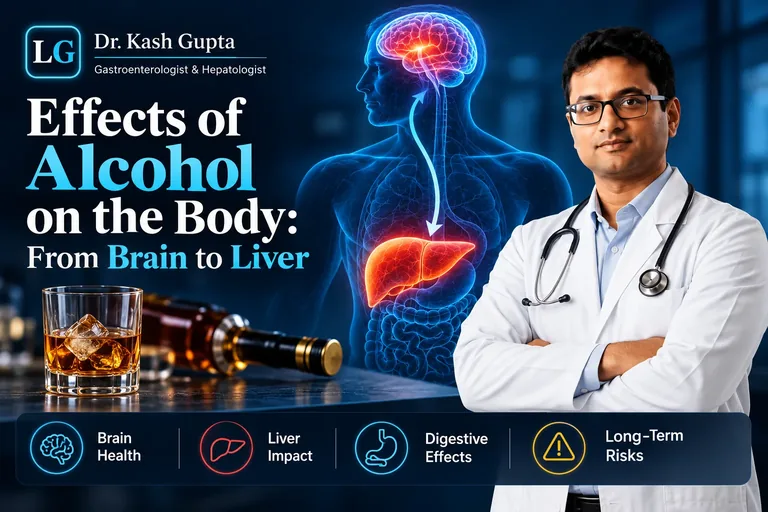
And it doesn’t stop at the stomach. My article on the effects of alcohol on the body goes from brain to liver. If bloating and heartburn bother you, read about alcohol and gut health too.
How to Reduce the Short-Term Effects and Long-Term Effects of Alcohol
You don’t need a perfect lifestyle. You just need a few smart habits.
- Pick a weekly limit and stick to it
- Keep a few alcohol-free days every week
- Sip water between drinks
- Never drink on an empty stomach
- Skip alcohol completely if you’re pregnant
Once you understand the short-term effects and long-term effects of alcohol, setting limits feels easier. It’s much simpler to prevent damage than to repair it.
When to Talk to a Doctor
Reach out if you can’t cut down, shake without a drink, or notice yellow eyes, a swollen belly, or constant tiredness. Don’t wait. One more thing: never stop heavy drinking suddenly on your own. Withdrawal can be risky, so get medical advice first.
Let’s Take the First Step Together
Your body is remarkably forgiving. Give it a break, and your liver, sleep, and mood often start to improve within weeks. You don’t have to be perfect. You just have to begin.
Still worried about the short-term effects and long-term effects of alcohol? You don’t have to sort it out alone. Tune in to my podcast, where I talk about liver and gut health in plain, everyday language. No jargon, I promise. It’s just like having a chat in my clinic, minus the waiting room. And if you’d like advice that fits your own life, book a consultation with me. I’d be glad to help you build a plan that works for you. Your future self will thank you.