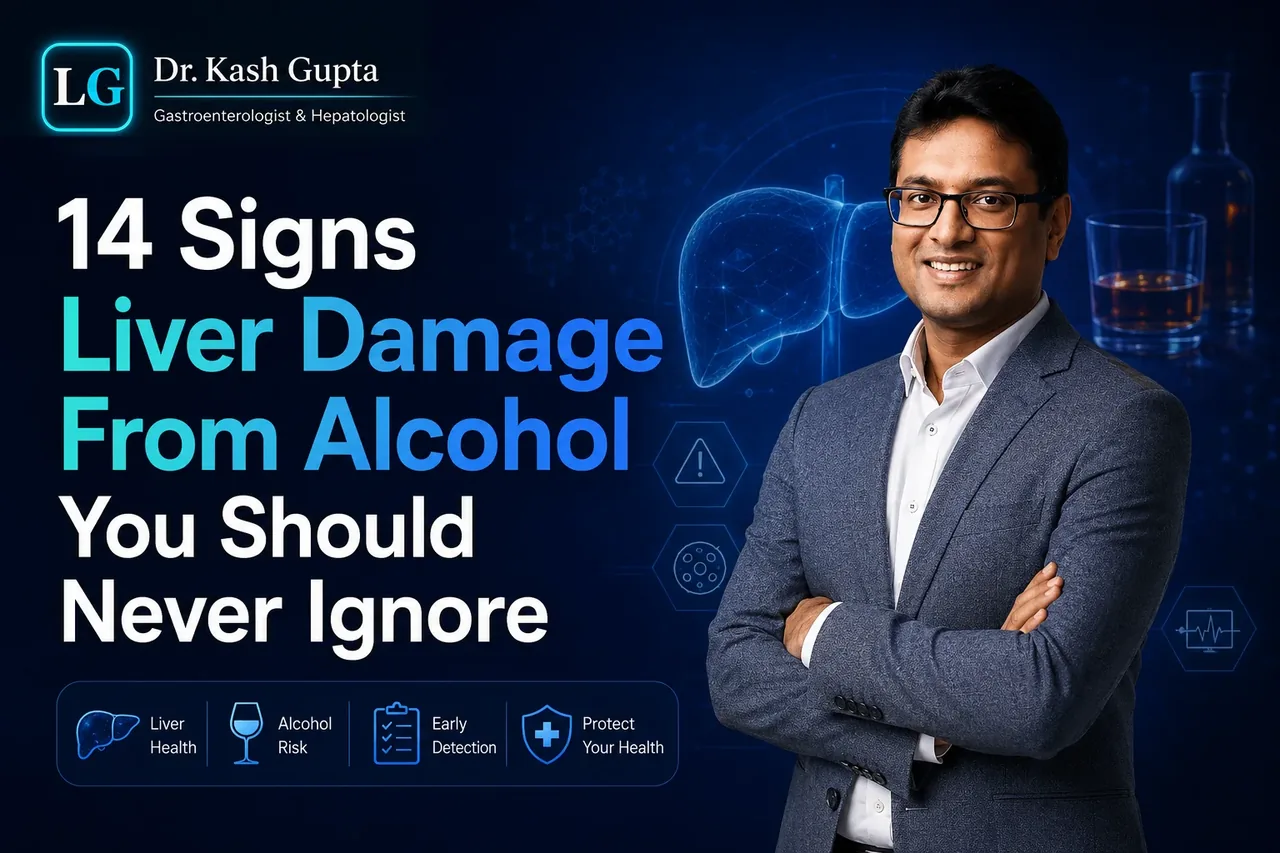
I had a patient last month – early forties, fit, ran marathons – who told me he “barely drinks.” Turned out it was wine most evenings, nothing wild, just… consistent. His scan showed early scarring. He was shocked. Honestly, I wasn’t. This happens more than people think, which is exactly why I want to talk through 14 signs liver damage from alcohol properly, not just as a checklist, but as things I actually see week after week in clinic.
Why This Sneaks Up on People
Here’s the thing about the liver – it doesn’t complain much. It just quietly absorbs the damage, unit by unit, glass by glass, for years. By the time most people feel something’s wrong, the liver’s already been dealing with it for a while. That’s what makes 14 signs liver damage from alcohol worth actually paying attention to, rather than waiting for something dramatic to happen.
The “Signs of liver disease” I Tell Patients to Watch For
1. Fatigue that doesn’t make sense
Not “I had a long week” tired – I mean the kind where you sleep eight hours and still feel like you got hit by a bus. That’s your liver working overtime and losing.
2. Going off your food
Meals you used to love just don’t do it for you anymore. Patients often mention this almost as an afterthought, but it’s usually one of the first things I ask about.
3. Weight dropping without trying
If the scale’s moving and your habits haven’t changed, that’s not a win. It’s usually your liver struggling to process nutrients the way it should.
4. Morning nausea that won’t quit
A rough morning after a big night is normal. Weeks of it isn’t. That’s your liver telling you it can’t keep up with clearing everything you’re putting into it.
5. A dull ache under your right ribs
People almost always blame this on their stomach or “eating too fast.” It’s actually your liver, swollen and inflamed, sitting right there.
6. Yellowing skin or eyes – jaundice
This one’s hard to miss once it shows up, and it means bilirubin is building up because your liver genuinely can’t keep clearing it.
7. Urine gone dark, stools gone pale
This often shows up before the yellowing does. It’s one of those quiet clues people mention almost in passing, not realising how much it tells me.
8. A swollen belly
Fluid building up in the abdomen – we call it ascites – means the liver’s lost its grip on managing pressure and protein levels in the body.
9. Puffy ankles by evening
Same root cause as the belly swelling, just showing up lower down. Patients usually notice their shoes feel tighter by the end of the day.
10. Bruising way too easily
Bumping into a table shouldn’t leave a mark for two weeks. Your liver makes clotting proteins, and when it’s struggling, so does your blood’s ability to clot properly.
11. Little red spidery marks on your skin
Usually on the chest or face. They’re called spider angiomas, and they show up because your liver isn’t clearing hormones the way it normally would.
12. Itching that won’t leave you alone, especially at night
This is bile salts building up under the skin. Patients often think it’s dry skin or an allergy at first.
13. Fuzzy thinking, forgetfulness, feeling “off.”
In more advanced stages, toxins your liver would normally filter start reaching the brain. Family members usually notice this before the patient does.
14. Blood tests that come back wrong – even when you feel fine
Honestly, this is how I catch a lot of this. No symptoms at all, just a number on a report that tells the real story.
I say this to almost every patient: your liver is patient with you for a long time. Longer than it should be. That’s not a good thing – it just means the warning comes later than you’d expect.
Liver Disease Stages – How It Actually Progresses
It’s not one dramatic jump from “fine” to “not fine.” It’s stages:
- Fatty liver – reversible, if you act.
- Alcoholic hepatitis – inflammation, still usually reversible.
- Fibrosis – scarring sets in, harder to undo.
- Cirrhosis – permanent, and function starts dropping for good.
This is really the whole point of learning 14 signs liver damage from alcohol – catching things at the first stage, not the third.
Who Ends Up on My Radar Most
- Regular drinkers, even ones who’d never call themselves “heavy.”
- Anyone carrying extra weight, because fat and alcohol both pile pressure on the liver.
- People with diabetes or insulin resistance.
- Anyone mixing alcohol with certain medications or supplements without realising the interaction.
- People with a family history of liver problems.
There’s a real overlap here with metabolic health too – I’ve gone into that more in my piece on how the liver and diabetes interact, if that’s relevant to you.
When You Should Actually Get It Checked
If two or more of these signs are showing up together, book an appointment. Don’t wait it out. And if you see yellowing eyes, vomit blood, notice black stools, or feel suddenly confused – that’s not a “wait and see” situation. That’s urgent care, today.
How We Actually Confirm What’s Going On
- Blood tests checking liver enzymes like ALT and AST.
- An ultrasound, or elastography scanning for stiffness and fat.
- Broader panels to rule out viral or autoimmune causes.
- Occasionally, a biopsy, if we need more clarity.
Most people are surprised at how much a simple blood test can pick up, often well before anything feels wrong at all.
What Genuinely Helps
- Cutting back on alcohol, meaningfully – this matters more than anything else on this list.
- Rethinking what’s on your plate. I wrote more on this in my fatty liver diet piece, worth a read.
- Moving your body regularly. Doesn’t need to be intense, just consistent.
- Repeating your bloods every few months to track real progress.
- Managing anything else going on – diabetes, cholesterol – alongside the liver, not separately.
The encouraging part? Catch it early, and a lot of this is genuinely reversible. I’ve watched it happen. That’s not me being optimistic for the sake of it – I’ve seen the scans improve.
Where I Land on All This
I’ve spent years believing the liver doesn’t get the attention it deserves, and honestly, most people only start paying attention once something’s already gone wrong. Knowing 14 signs liver damage from alcohol isn’t about scaring you into never drinking again. It’s about giving yourself the chance to catch something while it’s still fixable.
If any of this sounded a little too familiar while you were reading – please, don’t brush it off.
If you want more of this kind of straight talk, week to week, that’s basically what the Liver & Guts Podcast is for. And if you’d rather just get your own results looked at properly, you can book a private consultation at Harmony Gut & Liver.