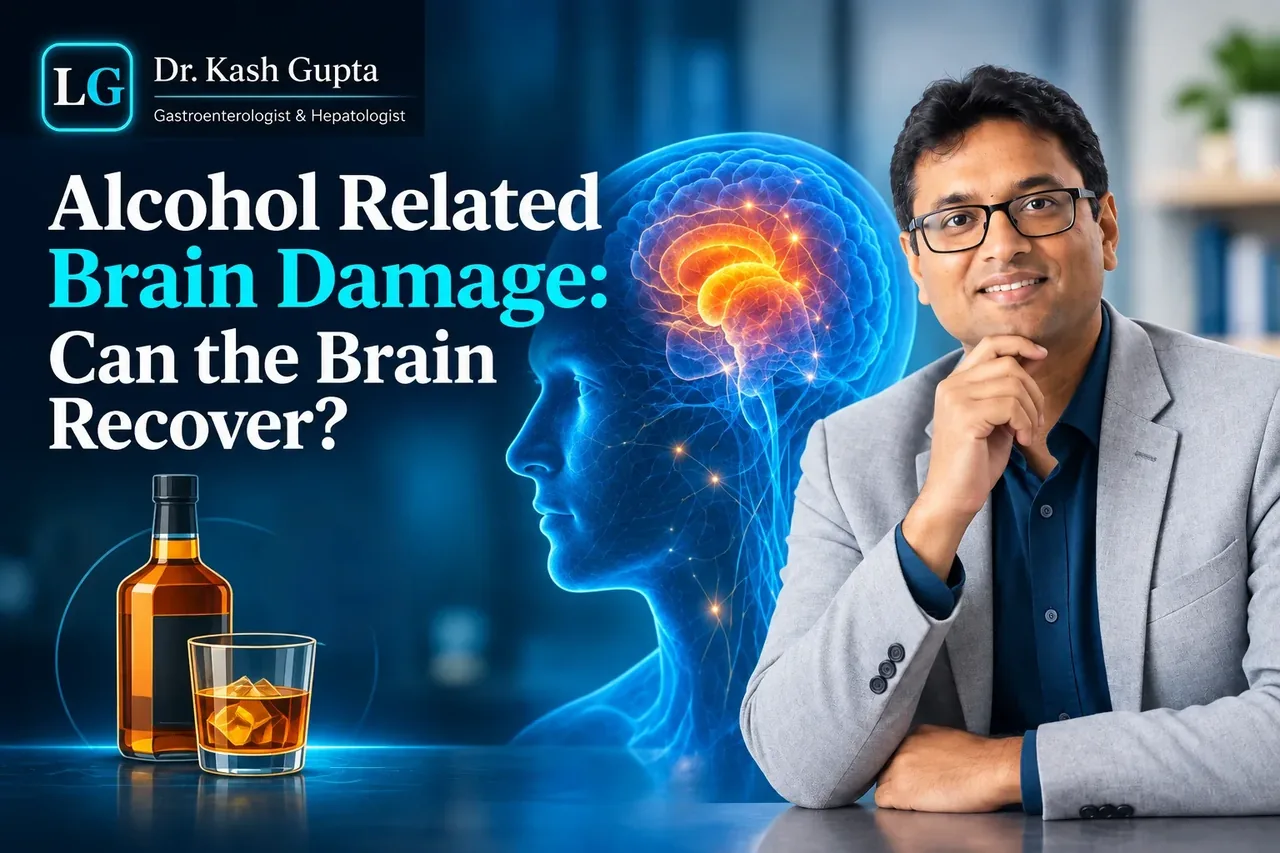
I’m Dr. Kash Gupta, and some conversations stay with me. A wife once told me, “He keeps forgetting things, and he’s only 52.” Years of heavy drinking were behind it. That’s alcohol related brain damage. Can the brain recover? Often, yes, at least in part. But only if help comes early.
What Is Alcohol Related Brain Damage?
Put simply, it’s what happens when you drink heavily for years. Alcohol is toxic to brain cells. It can also stop your gut absorbing thiamine, a vitamin your brain needs. When thiamine runs very low, it can cause Wernicke-Korsakoff syndrome, the most severe form.
Who Does This Affect?
Mostly people between 40 and 60. Men more than women, since men tend to drink more heavily. About one in three people with alcohol dependence have some degree of it. Plenty never notice until memory starts slipping.
Signs I’d Never Ignore
Look out for these:
- Forgetting recent conversations
- Struggling to focus or plan ahead
- Poor judgment or risky choices
- Low mood, anger or zero motivation
- Clumsy walking or slurred speech, even when sober
Can the Brain Really Recover?
Here’s what gives me hope. Unlike Alzheimer’s disease, alcohol related brain damage doesn’t keep getting worse once someone stops drinking. It acts more like a brain injury. With treatment and rehab, many people get their memory, focus and independence back. Some recover fully. Some only partly. Wernicke-Korsakoff damage can be permanent, so timing matters.
I think of one patient, a man in his fifties. He could barely hold a conversation when he first came in. After supervised treatment and a few months without alcohol, his memory improved a lot. His wife later told me, “I finally have my husband back.”
How We Treat Alcohol Related Brain Damage
Recovery takes a team. Usually it includes:
- Stopping alcohol safely, with medical supervision
- Thiamine and other vitamin replacement
- Rehab, memory support and counselling
- Regular meals and proper sleep
- Family support and steady follow-up
Please don’t quit suddenly on your own. Withdrawal can be dangerous, and it needs proper medical care.
How Much Alcohol Is Too Much?
The NHS says no more than 14 units a week. That’s about six pints of regular beer. Regularly drinking well above that can cloud your thinking. Binge drinking is especially rough on the brain. This kind of damage builds over years, not after a few big nights.
Want the bigger picture? I wrote about the effects of alcohol on the body. Your gut takes a hit too, which I cover in alcohol and gut health.
Protect Your Brain Now
You don’t have to wait for symptoms. Small changes help:
- Stay within 14 units a week
- Keep a few alcohol-free days
- Don’t skip meals
- Skip the binge sessions
- Ask for help early if cutting down feels hard
Supporting Someone You Love
Stay calm and kind. Blame rarely works. Many people don’t see how serious things are. Encourage them to see a doctor, and offer to go along. Be patient, because progress is often painfully slow.
Heavy drinking rarely harms just the brain. Check the liver too. My post on the 7 signs your liver is dying is a good start.
Final Thoughts
Alcohol related brain damage is serious, but it isn’t always permanent. Early help protects memory, mood, and independence. If any of this sounds familiar, please talk to a doctor. Don’t wait.
Take the next step with me:
- Listen to my podcast for simple, honest talks on liver, gut and brain health.
- Book a consultation with me, and let’s plan your recovery together.