A patient asked me something last month that stuck with me: “Doc, why does my sugar keep climbing when I’m not even eating that badly?” We ran a few extra tests. Turned out her liver was the real culprit, not her diet. This happens more than you’d think. The liver and diabetes relationship is one of those things nobody talks about enough, even though it explains a huge chunk of what I see in clinic every single week.
Why Your Liver Matters for Blood Sugar
People tend to think of the liver as just a filter, something that cleans out toxins and gets on with it. It’s actually doing a lot more than that.
- It stores sugar as glycogen right after you eat
- It releases that sugar back out between meals so you don’t crash
- It helps process insulin, the hormone that keeps your blood sugar in line
- It converts leftover sugar and calories into fat when there’s too much of it
When it’s working properly, you don’t feel any of this happening. That’s the point. But once it starts struggling, blood sugar becomes unpredictable, and that’s often the very first clue something’s wrong, well before anyone thinks to blame the liver.
How Fatty Liver Leads to Diabetes
Here’s the honest version I give patients in the room. Eat more than your body can use, especially sugar and refined carbs, and your liver has to do something with the excess. It stores it as fat. Keep doing that for years, and you end up with fatty liver disease, often without a single symptom to warn you.
Once fat builds up in there, the liver stops listening to insulin properly. That’s insulin resistance, in plain terms. Your pancreas panics a little and starts pumping out more insulin to compensate. For a while it works. Then it doesn’t. Blood sugar creeps up, and type 2 diabetes shows up not long after.
Honestly, I’ve started telling people that fatty liver is often the first real warning sign of diabetes, sometimes years before a single blood test flags it.
How Diabetes Damages the Liver
And it’s not a one-way street either. Diabetes hits back.
- High blood sugar shoves even more fat into liver cells
- Insulin resistance keeps the liver in a low-grade state of inflammation
- Years of high glucose can lead to scarring, what we call fibrosis
- Left alone long enough, this can slide toward cirrhosis
So if you’re already living with diabetes, your liver is quietly taking a beating in the background, even if you feel totally fine. This is exactly why I stopped treating liver and diabetes as two separate boxes to tick. They’re really one problem wearing two different masks.
Signs You Shouldn’t Ignore
The frustrating part about liver issues is how quiet they are. Still, a few things are worth noticing:
- Tiredness that doesn’t go away no matter how much you sleep
- A dull, nagging discomfort under your right ribs
- Weight that shifts without any clear reason
- Skin that looks a bit off, slightly yellow or just dull
- Blood sugar that won’t budge even though you’re on medication and doing everything right
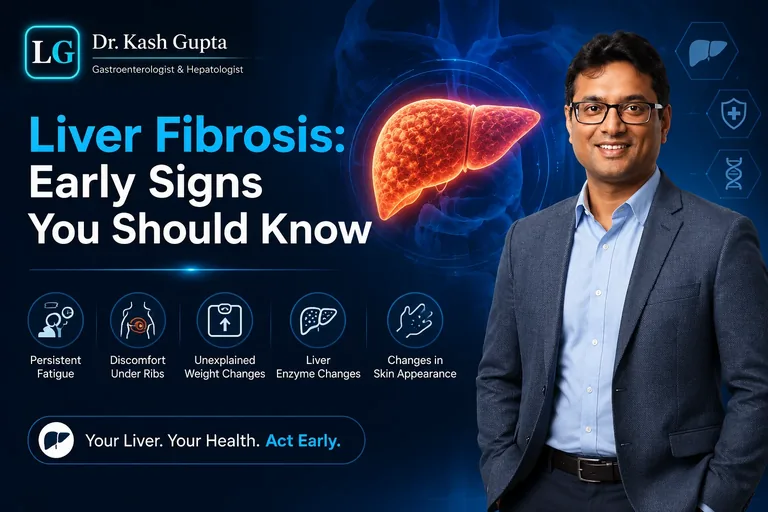
One of these alone doesn’t mean much. But a few together, especially if you already have diabetes or prediabetes, that’s worth a proper conversation with your doctor.
The Metabolic Syndrome Link
Fatty liver and type 2 diabetes almost never show up alone. They usually bring friends along, what we call metabolic syndrome:
- High blood pressure
- Extra weight around the middle
- High triglycerides
- Low HDL, the good cholesterol
Tick three or more of those boxes and your risk of both liver disease and diabetes climbs noticeably. Here’s the silver lining though. Fix one of these and the rest tend to follow. Your body doesn’t really separate them, so why should we?
What Actually Helps
I trained at Oxford and later spent time at Harvard digging into liver research, and if there’s one thing that’s held up through all of it, it’s this: lifestyle changes still beat most of what’s in a prescription pad for early liver disease. Nothing fancy, just consistency.
- Cut back on sugar and refined carbs: Nothing fills up a liver faster.
- Get moving, even just walking: Insulin sensitivity improves within weeks of regular activity.
- Eat more protein and fibre: Keeps blood sugar from spiking after meals.
- Sleep properly: Bad sleep quietly wrecks insulin sensitivity more than people realise.
- Ease up on alcohol: It’s extra weight on a liver that might already be struggling.
- If you’re carrying extra weight, aim for 5 to 10% loss: Even that modest amount can noticeably shrink liver fat.
None of this requires going to extremes. Small habits, kept up over months, beat any crash diet I’ve ever seen a patient try.
Testing and Monitoring
If diabetes runs in your family, or you’re prediabetic, or you already have diabetes, please get your liver checked, and don’t wait for symptoms. Usually this means:
- A liver function blood test
- A fibrosis score
- Imaging like an ultrasound or FibroScan when needed
Catch it early, and you have real options. Wait too long, and the damage becomes much harder to reverse. I’ve written more on how fatty liver disease actually develops and who’s most at risk; you can find it on my site if you want to dig deeper.
A Connected System, Not Two Separate Problems
The longer I do this work, the more I’m convinced that your liver and your blood sugar aren’t really separate stories. They’re the same story told from two angles. Look after one, and you’re almost always helping the other, through better food, more movement, proper sleep, and regular check-ups.
If you have diabetes, don’t wait around for liver symptoms before you ask questions. And if you already know your liver has fat on it, get your blood sugar checked properly and often, not just when something feels wrong. The liver and diabetes connection is one of the most overlooked parts of metabolic health, and understanding it early really can change where things go for you.
Final Thoughts
Want to go deeper into this? I talk through the science behind liver and metabolic health most weeks on the Liver & Guts Podcast, real research, explained the way I’d explain it to a friend. And if you’d like someone to actually look at your own liver and metabolic health, you’re welcome to book a private consultation through my website. Livers rarely ask for attention until they’re already in trouble. Let’s get ahead of it.